Medical Sterilizers: Leak Tests and Warmups
Authored by Jonathan Carfora, Technical Services Trainer
In sterile processing, precision and accuracy are critical. Sterilizers are essential for ensuring that surgical instruments are free from harmful microbes and safe for patient use. The effectiveness of these machines relies on consistent maintenance practices. Among these, leak tests and warm-up cycles are important procedures that help maintain the reliability and safety of the sterilization process, ensuring that every instrument is properly sterilized.
The Role of Leak Testing & Warmup Cycles
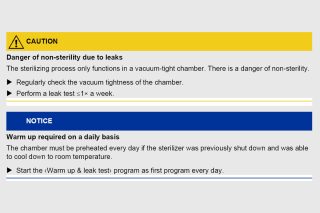
Leak testing is a procedure that ensures the integrity of the sterilizer’s chamber, door seals, and piping systems. Any air that remains in the sterilizer chamber during the cycle can prevent steam from fully penetrating the load, leading to failed cycles or wet packs. A warmup program is also important to the proper operation of a sterilizer. Warmup cycles should be run whenever the sterilizer chamber has been allowed to cool down. This prevents excessive moisture from accumulating in the chamber. On some sterilizers, leak tests and warmups can be run at the same time using the “warm up & leak test” program.
Leak tests should be performed at least once per week, and warmups should be performed at the beginning of each day or after a period of inactivity.
Why Is Leak Testing So Important?
- Ensures Complete Air Removal: Air removal is essential for effective sterilization. Air pockets can create cold spots within the chamber, where steam cannot reach, leaving parts of the load unsterilized. Regular leak testing ensures that the vacuum system is performing correctly, fully evacuating air before the sterilization cycle begins.
- Prevents Contamination: The presence of unfiltered air can introduce contaminants into the sterilizer chamber, compromising the sterility of the instruments. A secure, airtight chamber prevents this risk. Leak testing helps identify and correct leaks that could lead to contamination.
- Maintains Sterilizer Performance: Air leaks can cause fluctuations in temperature and pressure, which are critical for the sterilization process. Even minor leaks can lead to significant performance issues over time, as AAMI ST79 notes. Regular leak testing ensures that the sterilizer operates within the required parameters, maintaining both efficiency and effectiveness.
- Compliance with Standards: Failure to conduct regular leak tests can result in non-compliance with standards such as AAMI ST79.
Why Are Warm-Up Cycles Necessary?
- Uniform Temperature Distribution: Warm-up cycles help ensure that the entire load reaches the necessary temperature, reducing the risk of cold spots that could compromise sterilization.
- Reduction of Moisture Formation (Wet Packs): Running a warm-up cycle helps to minimize the risk of moisture forming inside the sterilizer chamber, which can lead to wet packs. Ensuring the chamber is at the correct temperature before starting the sterilization process reduces the amount of condensation formed in the chamber.