The Importance of Equipment Calibration
in Medical Device Reprocessing
Authored by Jonathan Carfora, Technical Services Trainer
What is Calibration?
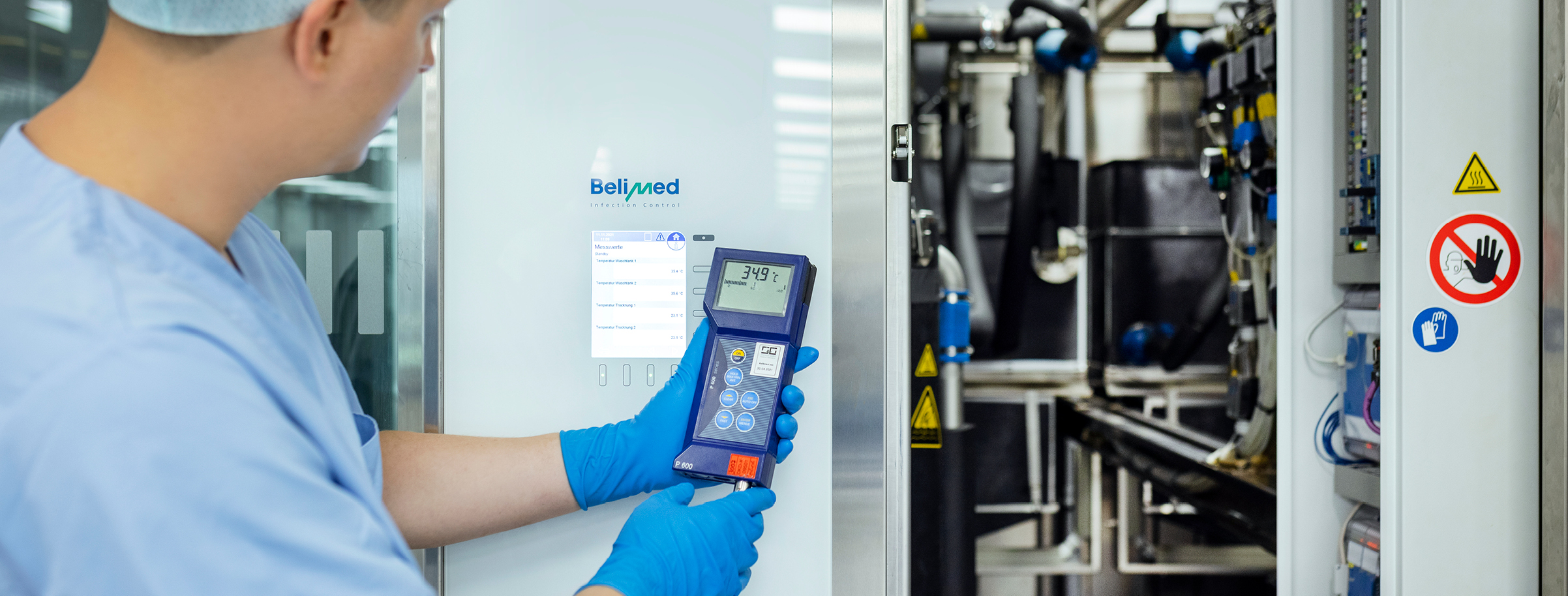
Calibration involves comparing the performance of a device with a standard of known accuracy. This process helps detect any deviations or inaccuracies in the equipment’s functionality, allowing for necessary adjustments or repairs. Calibration is especially important in sterile processing, where temperature and pressure must precisely reach specified values to provide sterility assurance. Requirements for calibration, including how frequently a device needs to be calibrated can be found in the device’s technical manual.
Why is Regular Calibration Important?
- Calibration ensures accuracy and reliability. For example, a sterilizer that isn’t calibrated correctly might not reach the necessary temperature or pressure, leading to ineffective sterilization and potential infection risks.
- Routine calibration also maintains compliance with health standards, such as those set by the FDA, CDC, and ISO. The ANSI/AAMI ST79 document is particularly crucial, providing comprehensive guidelines for steam sterilization and sterility assurance in healthcare facilities.
- Calibration enhances equipment longevity by identifying potential issues early, preventing costly breakdowns, and extending the equipment’s lifespan. Well-maintained equipment operates more efficiently, reducing the likelihood of unexpected failures that can disrupt the workflow.
- Accurate and reliable infection control equipment is essential in preventing healthcare-associated infections (HAIs).
- Regular calibration minimizes the risk of equipment malfunction. A device that is not properly calibrated may have frequent breakdowns and other operational failures.
- While calibration involves some costs, it can save money long term by avoiding expensive repairs, reducing downtime, and preventing the spread of infections. Investing in regular calibration can lead to significant savings by enhancing the overall efficiency and reliability of the equipment.
Steps for Effective Calibration
- To ensure effective calibration, it’s important to create a routine schedule, based on the manufacturer’s recommendations and the equipment’s usage frequency. For many devices, calibration is checked annually along with other normal annual preventative maintenance items. There are also daily duties and responsibilities the end users must watch for during normal operation.
- Calibration should be performed by trained and qualified technicians. Partnering with the equipment manufacturer or certified service providers ensures that the calibration is done correctly.
- Maintain detailed records of all calibration activities, including the dates, results, and any adjustments made. Proper documentation helps track the equipment’s performance over time and ensures compliance during audits.
- Equipment used in calibration must be in good working conditions. The kits used to perform calibration must also be checked regularly for proper operation and certified to perform calibrations.
- Regular calibration of infection control equipment is an essential practice in healthcare settings. It ensures the accuracy and reliability of the devices, maintains compliance with health standards such as ANSI/AAMI, CMS and The Joint Commission, extends equipment longevity, improves patient safety, and is cost-effective. By following a routine calibration schedule and involving qualified technicians, healthcare facilities can enhance their infection control measures and contribute to better patient outcomes.
References
Association for the Advancement of Medical Instrumentation. Comprehensive guide to steam sterilization and sterility assurance in health care facilities. ANSI/AAMI ST79:2017. Arlington, VA: AAMI; 2017.
To learn more about routine maintenance and other Field Service Training courses offered at the SteelcoBelimed Academy, check out our Technical Training page.